.png)
Tuesday, Jan. 6, 2026 | 2 a.m.
Editor’s note: “Behind the News” is the product of Sun staff assisted by the Sun’s AI lab, which includes a variety of tools such as Anthropic’s Claude, Perplexity AI, Google Gemini and ChatGPT.
Five years after the Jan. 6, 2021, attack, at least seven deaths are linked to the Capitol riot, including one rioter shot by police, one rioter who died of a drug overdose, several people who suffered medical emergencies and a Capitol Police officer who died of strokes after being assaulted. Several officers who defended the Capitol later died by suicide, and hundreds more have lived with lasting physical and psychological trauma. Many of those survivors and the families of the dead have described sweeping pardons for the rioters as a profound betrayal of their sacrifice and of the rule of law. [1]
Death toll and casualties
Within about 36 hours of the attack, five people had died: one rioter was shot by Capitol Police while trying to breach a barricaded area, one died of a drug overdose and three others died of medical emergencies during or just after the riot. [1]
A Capitol Police officer who had been assaulted by rioters collapsed and died of stroke the next day, and at least four law enforcement officers who responded to the attack later died by suicide, which some lawmakers and families argue should be counted among the deaths tied to Jan. 6. [3]
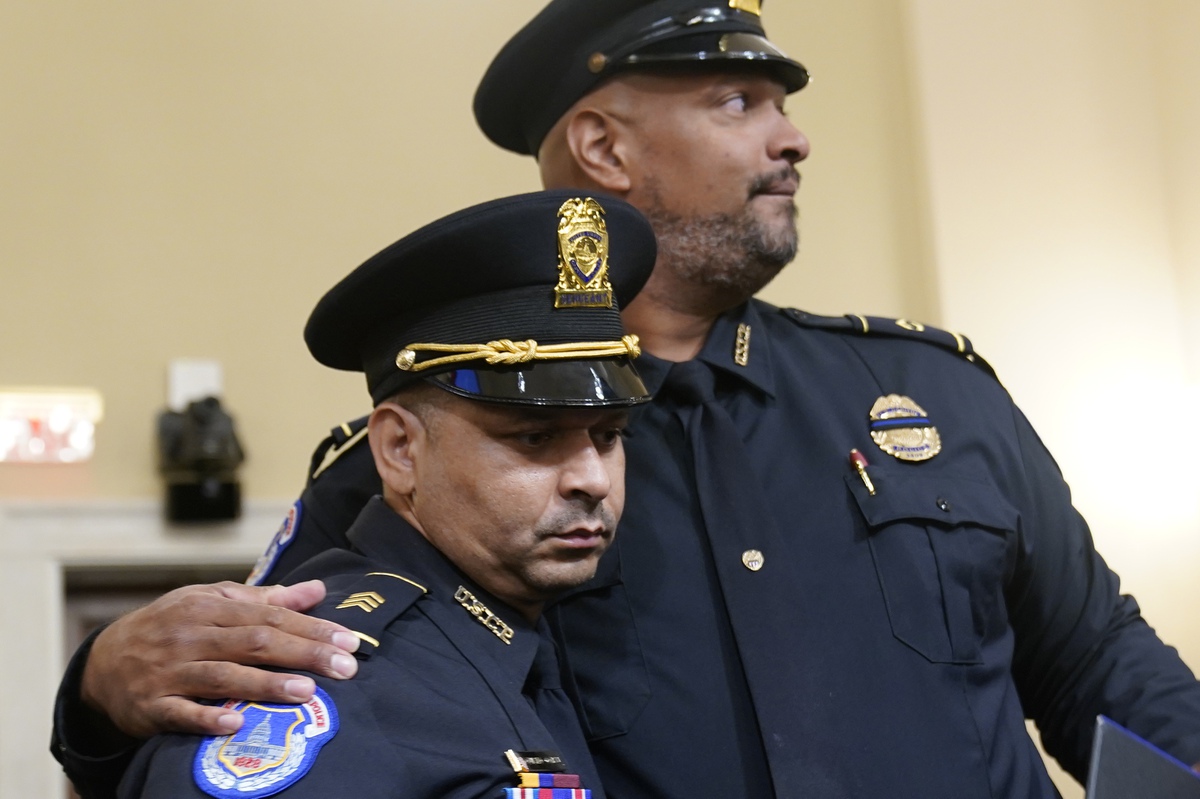
More than 140 police officers from the Capitol Police and Washington’s Metropolitan Police Department were injured, with some suffering cracked ribs, spinal damage, brain injuries and lasting psychological distress. Many describe symptoms consistent with PTSD, including flashbacks, nightmares and hypervigilance. [4]
Officer testimonies: ‘It was carnage’
U.S. Capitol Police officer Caroline Edwards, believed to be the first officer injured outside the Capitol that day, testified that the West Front felt like “a war scene,” with officers bleeding, vomiting and collapsing as they fought hand-to-hand to hold the line. [5]
She was knocked unconscious, suffered a traumatic brain injury, was repeatedly sprayed with chemicals and tear gas, and has not been able to return to her first-responder post because of ongoing symptoms.[5]
Officers who served Jan. 6 have said that rewriting the day’s events as a peaceful protest, or pardoning those convicted of assaulting them, sends the message that their pain and injuries do not matter and that political violence against police is acceptable if it serves partisan ends. [7, 8]
Long-term PTSD
Many of the most powerful firsthand accounts of Jan. 6 come from officers who later described textbook PTSD symptoms: flashbacks, intrusive memories, panic, anger, depression and, in some cases, suicidal thinking. Their stories underline how the trauma did not end when the building was cleared; for some, the attack is still ongoing. [9]
Harry Dunn: ‘It broke me’
Capitol Police officer Harry Dunn has said that, even years later, the emotional pain of Jan. 6 “broke” him, describing how a sudden wave of symptoms undid months of progress he thought he had made in healing. [10]
Dunn, who is Black, testified that rioters hurled racist slurs at him and has spoken openly about needing psychotherapy and peer support to cope with trauma, saying he loves therapy and calling it one of his “best friends” in dealing with PTSD. He has described the insurrection as “still ongoing” in his life, saying he has more good days than bad now but the attack is never far from his mind and that stigma and cruelty, even from other officers, make recovery harder. [11]
Michael Fanone: Heart attack and PTSD
Former D.C. Metropolitan Police officer Michael Fanone was dragged into the mob, beaten and repeatedly shocked with his own stun gun until he lost consciousness. He later learned he had suffered a heart attack, concussion and traumatic brain injury. [2]
Fanone has said that when the physical pain subsided, he was “left with the psychological trauma and the emotional anxiety” of having survived, describing nightmares, hypervigilance and classic PTSD symptoms that continued long after he left the force. Watching political leaders downplay the attack or praise rioters has, in his words, added anger and a sense of betrayal to that trauma, making it harder to move on. [12, 13]
Aquilino Gonell: More brutal than Iraq
Capitol Police Sgt. Aquilino Gonell testified that Jan. 6 was more brutal and traumatic than his Army deployment in Iraq, recounting how he was beaten, crushed in a doorway and doused with chemicals. [6]
Gonell said he returned home around 4 a.m. Jan. 7 but could not hug his wife because of the chemicals on his uniform, then went back to work later that morning and continued for 15 straight days, only later realizing the depth of his psychological and physical injuries. He told Congress that the trauma “has not ended” for those who were in the thick of the violence and called for sustained mental health support and recognition of the emotional toll on officers and their families. [6, 7]
Families’ response to pardons: ‘A betrayal’
Families of people who died in connection with Jan. 6 have described President Donald Trump’s mass pardons as reopening their grief and erasing hard-won accountability. Many explicitly frame the decision as a betrayal of their loved ones’ sacrifice, of basic decency and of the justice system itself. [14]
Sicknick family:
Capitol Police Officer Brian Sicknick died a day after defending the Capitol. His family said pardoning those convicted in the attack, including the man who assaulted him, amounts to undoing the justice that was previously determined by the courts. [15]
Brian’s brother Craig has called the pardons a “betrayal of decency” and said the new president is a “poor excuse of a man,” adding that the move has “ripped everything wide open again” after years of trying to cope with the loss. In interviews and statements, the family says they are “depressed” and “angered,” and they worry that the truth of what happened Jan. 6 will be buried for partisan reasons if those who attacked the Capitol are treated as victims or patriots. [16, 17]
Craig Sicknick has told reporters that the pardons make him feel as if his brother “died in vain,” because the people whose violence contributed to Brian’s death now face no lasting legal consequences. He has argued that the decision sends a message that assaulting officers in the name of a political cause is forgivable, saying that the president “doesn’t understand pain or suffering of others.” [18]
Erased sacrifice, fear for the future:
Relatives say the clemency order adds to their pain by signaling that their loved ones’ deaths and injuries were just collateral damage in a political fight, rather than crimes that demanded accountability. [14]
Several family members and allies, including New Jersey Gov. Phil Murphy and Sen. Cory Booker, D-N.J., emphasize that pardoning people seen on video beating officers disrespects law enforcement and could encourage similar violence in future crises. Families repeatedly stress a hope that “the truth of what happened that tragic day will survive, irrespective of partisan political objectives,” even as they feel abandoned by a president who has aligned himself with the rioters. [15, 16]
Trump’s defense of pardons
In office again, Trump has defended broad clemency for more than 1,500 Jan. 6 offenders, including people convicted of assaults on police, characterizing many of the attacks as minor incidents and the prosecutions as unfair and politically motivated. [19]
Democrats’ reactions
Democrats in both chambers have broadly condemned the pardons as shameful, “an affront” to law enforcementofficers and a signal that political violence can go unpunished if it serves the president’s interests. [21]
House Democrats who witnessed the attack, including those who helped lead the Jan. 6 select committee, have said the clemency order rewrites history and betrays officers and staff who risked their lives during the certification of the 2020 election.
Some Democrats, including Sen. Richard Blumenthal of Connecticut, also criticized former President Joe Biden’s late-term family pardons but stressed that Trump’s blanket pardons for rioters — especially those convicted of violence — pose a unique threat by excusing an assault on the peaceful transfer of power. [22, 23]
Republicans critical of pardons
A number of Republican senators and representatives, including some who had previously broken with Trump over Jan. 6, said they “just can’t agree” with pardoning violent offenders and would not defend the decision. [24]
Figures such as Sens. Lisa Murkowski of Alaska, Bill Cassidy of Louisiana and Susan Collins of Maine have argued that people who assaulted police on Jan. 6 “should do the time,” warning that wiping away those sentences undermines public trust and sends the wrong message about attacking law enforcement. [20, 22]
Nevada reactions
Nevada Democrats have condemned Trump’s Jan. 6 pardons as reckless and anti-law enforcement, while Nevada Republicans have largely stayed quiet or focused on other issues, even as multiple Nevadans benefited directly from the clemency. The divide in the delegation mirrors the national split, but with added local resonance because at least eight Nevadans had their Jan. 6 cases wiped away and Oath Keepers founder Stewart Rhodes, who started the group in 2009 while living in Las Vegas, received a commuted sentence. [27]
Sen. Catherine Cortez Masto, D-Nev, took to the Senate floor to denounce Trump’s pardons of “the violent criminals who assaulted police officers on Jan. 6,” calling them anti-law enforcement and co-sponsoring a resolution to formally condemn the pardons. She argued that colleagues who claim to be pro-police should oppose letting people who beat officers or helped the mob walk free, framing the pardons as a slap in the face to both Capitol Police and communities hurt by violent crime and drug trafficking. [28]



 English (US) ·