.png)
 2 hours ago
4
2 hours ago
4
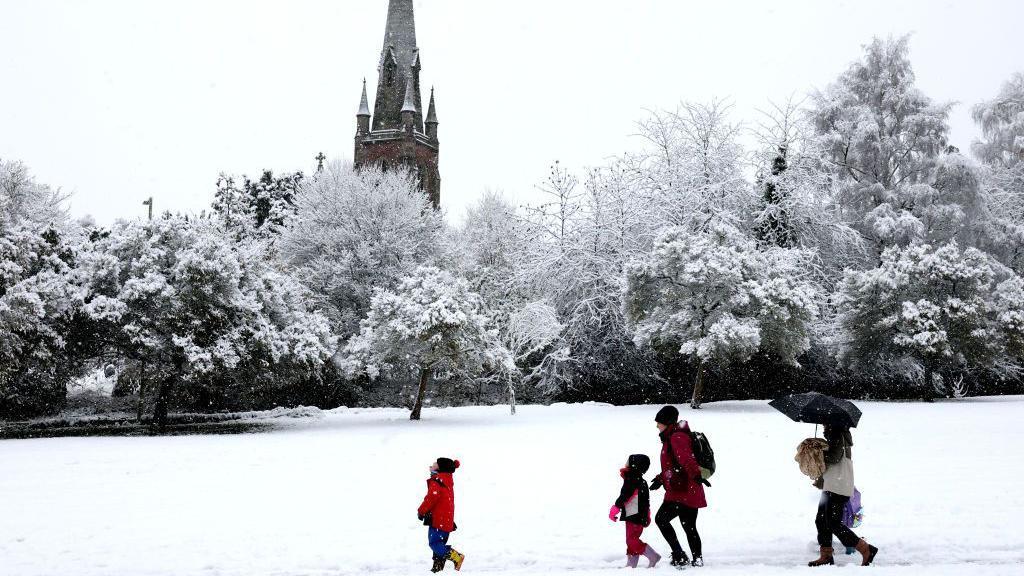 Image source, Getty
BySimon King Lead Weather Presenter and Ema SabljakBBC England Data Unit
We've had songs written about it, it features on Christmas cards and films - with almost every advert throughout December showing it.
Most of us will dream or romanticise about a white Christmas, but how common or not is it to have one in the United Kingdom?
According to the Met Office, an "official white Christmas" has happened more often than not since 1960, but new analysis of its data by the BBC shows that locally, snow falling on Christmas Day is rare for most of us.
And there have been fewer stations reporting a white Christmas in the past two decades across the UK, according to the data.
The Met Office officially defines a white Christmas as one where snow is reported to fall at any of its weather stations in the 24 hours of Christmas Day.
If there was no snow falling but snow already on the ground, this is not defined as a white Christmas.
On this definition, three out of four Christmases since 1960 have seen at least a flake of snow fall somewhere in the UK.
Analysis of Met Office data by the BBC shows at a very local level it's unlikely you will have experienced many white Christmases where you live.
For example, during the most recent white Christmas in 2023, snowfall was only seen at three stations in the Highlands and one in Aberdeenshire.
Use the tool below to see how many white Christmases have been reported at weather stations near you.
While the official definition of a white Christmas has changed in the past, along with the number of stations and how it is observed, the data will still include all recorded instances of snow falling on Christmas Day.
'It probably frightened Father Christmas'
Ian Currie from London was 12 years old when he was given a weather station for Christmas in 1962. It included a rain gauge, a funnel and a brass container. On Boxing Day, he said it snowed so much, his instruments were buried.
"I remember the milk bottles freezing with a column of ice," said Mr Currie, who went on to become a weather forecaster, author and editor of Weather Eye magazine.
"Couldn't be better timed to encourage a young weatherman in the making."
"The classic white Christmas that I remember was 1970," he added.
"It snowed heavily the day before and over Christmas Day and Boxing Day - metres of snow fell."
He recalled "a terrific flash of lightning and almost instantaneous crash of thunder, which woke quite a few people up - and probably frightened Father Christmas".
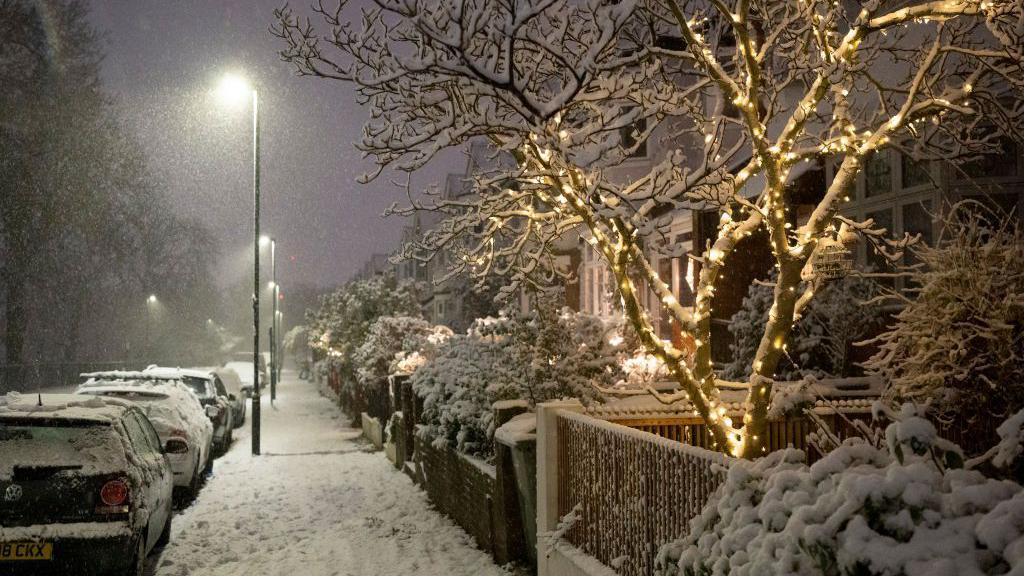 Image source, Getty
There is lots of nostalgia about waking up on Christmas Day with a blanket of snow with more falling
Dreaming of a white Christmas?
The classic "white Christmas" idea is thought to originally come from the Victorian era when snowy winter days were much more frequent than today.
Coincidentally this is a period when sending Christmas cards first became widespread, depicting the snow scenes of the time, a tradition that continues to the day.
Christmas movies originating from the United States also show snowfall on Christmas Day, something more common in parts of North America.
While it is likely somewhere in the UK will see snow falling at Christmas, for the majority, this will not be the case.
Most white Christmases are found, perhaps unsurprisingly, in Scotland where over the past 65 years, 43 were "white". Northern Ireland had the least with less than a third of those years recording a white Christmas.
In fact, Northern Ireland has not recorded a white Christmas for 14 years.
Across England you will have most likely experienced a white Christmas in the North West where nearly 40% of years recorded snow on Christmas Day since 1960.
Quite a contrast to the South East where since 1960, London has only seen five Christmas Days where snow fell, the last one more than two decades ago in 2001.
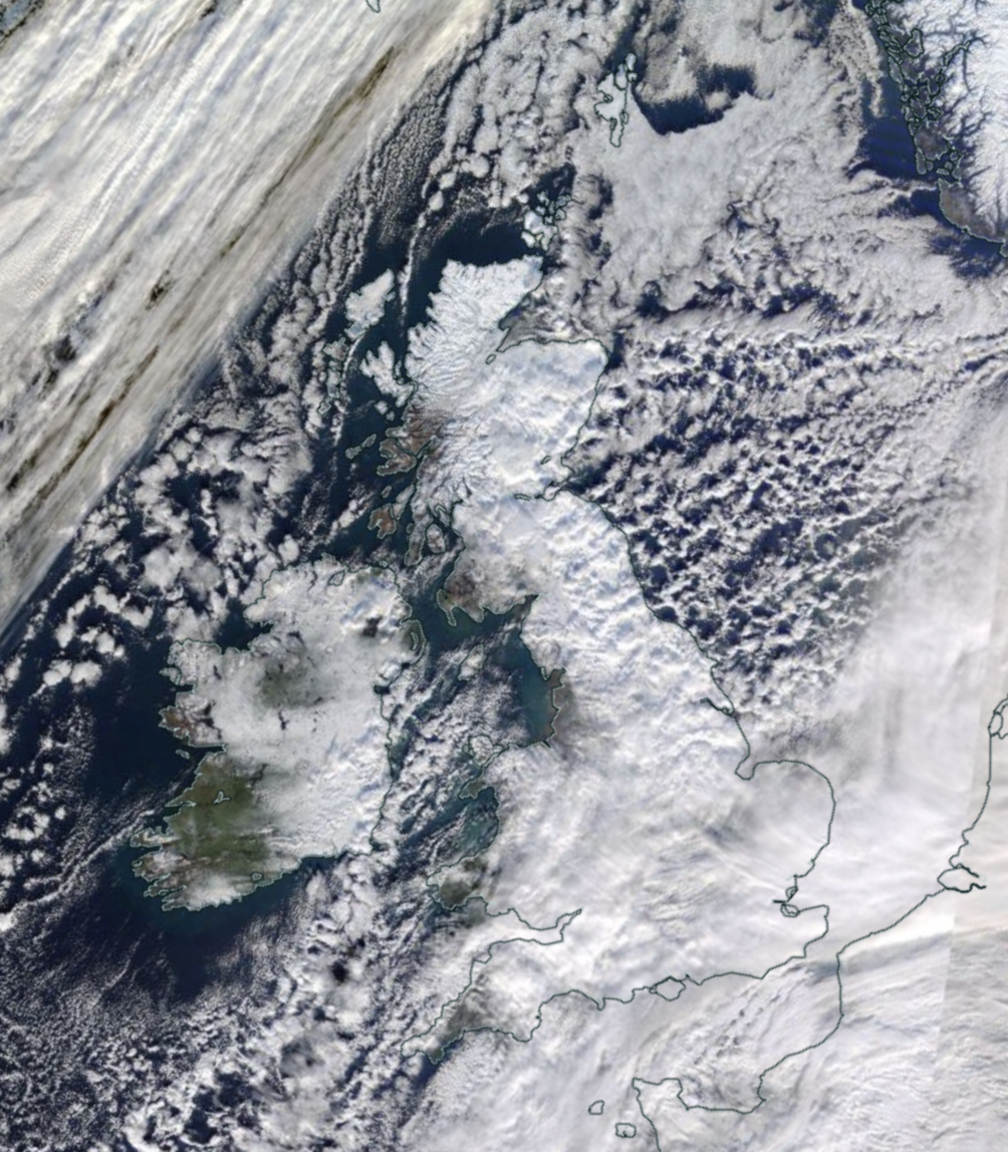 Image source, NASA Worldview
On Christmas Day in 2010 there was widespread lying snow across the UK
You might remember Christmas of 2010 when most of us would have opened the curtains on Christmas Day to a Christmas card scene with snow on the ground.
About 80% of weather stations recorded lying snow that year but only 30 stations had snowfall meeting the definition of a white Christmas. Compare this to 2004 when snow was observed at 146 weather stations.
Francesca Di Giuseppi, principal scientist at the European Centre for Medium-Range Weather Forecasts, was in Reading over the Christmas period in 2010 and remembers having snowball fights with the friends she lived with.
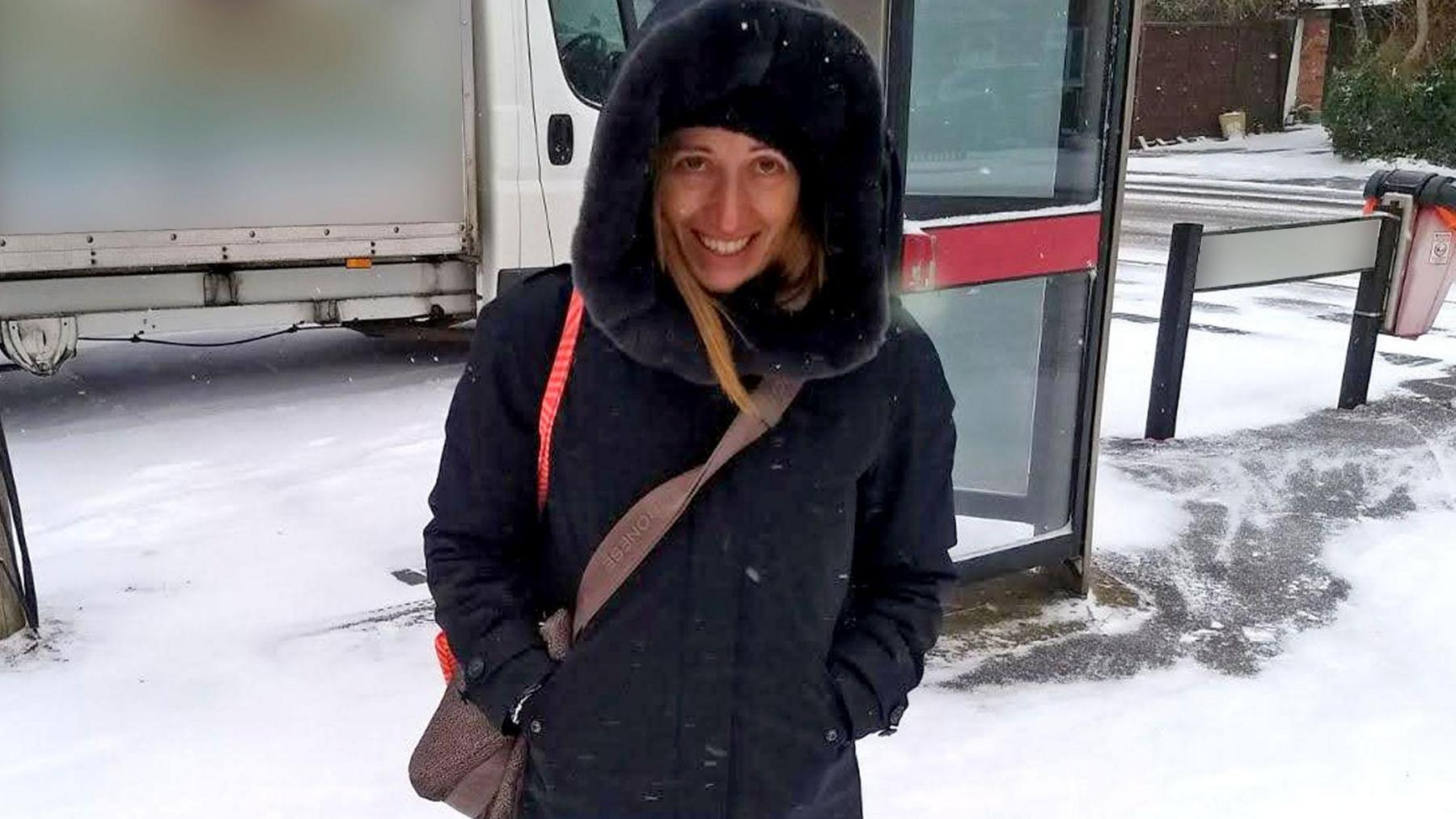 Image source, Francesca Di Giuseppi
Scientist Francesca Di Giuseppi said she had found the snow "actually quite magical"
"We made a snowman - I remember not having a carrot to put on the nose, so we ended up with an apple," she said.
"We were a household of southern Europeans, not very used to snow in our home countries. It was actually quite magical."
She said she believed the excitement over white Christmases stemmed from snow slowing things down, meaning it is an excuse be at home with family and "see the beauty of nature".
White Christmas and climate change
The Met Office data analysed by the BBC suggests there have been fewer widespread white Christmases in past two decades.
While we cannot use what happens on one day of the year to assess whether the decline is due explicitly to climate change, scientists suggest a white Christmas will become less likely in the future.
According to the Met Office, the UK has already warmed by 1C since about the 1950s and we have seen less frost and snow as a result.
In the 1990s and early-2000s there were five years with a widespread white Christmas where more than 100 weather stations reporting falling snow.
But in the past 20 years the most stations reporting a white Christmas was 30 in 2010.
So far in the 2020s there have already been four white Christmases declared with snowfall reported somewhere in the UK but falling snow was only confirmed by at most six stations in a year.
While better technology means recording snowfall at just one location in the UK has increased the likelihood of having a confirmed white Christmas, the number of stations actually seeing snow on Christmas Day appears to have declined.
Our winters are expected to get warmer and wetter and a Met Office spokesperson confirmed snowy spells were "becoming less frequent as our climate warms".
They added "natural variability means cold, snowy periods will still happen", but we can expect "fewer frost and snow days".
Additional reporting by Alix Hattenstone.




 English (US) ·