.png)
Sunday, Dec. 21, 2025 | 2 a.m.
Editor’s note: “Behind the News” is the product of Sun staff assisted by the Sun’s AI lab, which includes a variety of tools such as Anthropic’s Claude, Perplexity AI, Google Gemini and ChatGPT.
President Donald Trump’s 2025 executive actions align closely with the Heritage Foundation’s Project 2025 blueprint, with analyses showing that a swath of its recommendations have been implemented through executive orders, including verbatim language in some cases. [1] [2] Of his 26 orders on his first day in office back in Januray, 16 aligned directly with Project 2025 proposals, despite Trump’s campaign disavowal of the controversial plan. [3]
Mass deportations and immigration enforcement
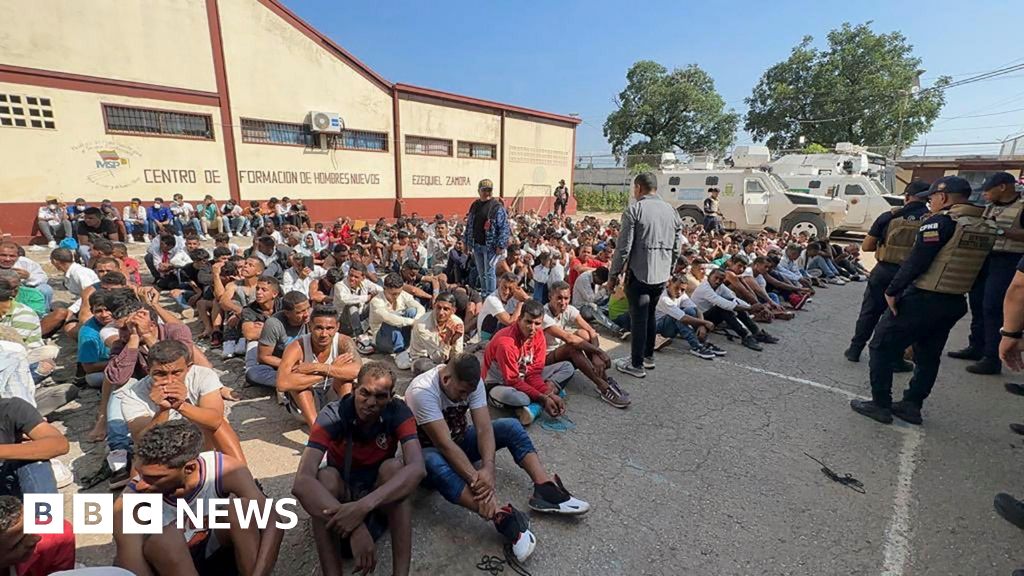
Trump launched what officials call the largest deportation program in U.S. history, investing billions in detention facilities and ending ICE restrictions on raids in sensitive areas. [4] The crackdown expanded detention facilities, empowered local law enforcement for immigration enforcement, restricted public benefits for undocumented immigrants and rolled back Biden-era parole policies. [5]
The administration imposed financial penalties on sanctuary jurisdictions obstructing federal enforcement, matching Project 2025’s funding disincentives. [1] Democratic attorneys general from 21 states sued over related FEMA funding cuts for noncooperative states, seeking to restore $4.5 billion in disaster grants. [1] [6]
Travel bans and visa restrictions
In June, Trump expanded travel bans to 19 countries, including Iran, China and several Middle Eastern nations, combined with restrictions on student visas and Optional Practical Training. [8] The policies created uncertainty through longer vetting, social media scrutiny and visa denials. [9]
The administration also imposed $100,000 fees per H-1B visa, deterring tech companies like Amazon and Microsoft. [10] H-2A visa rules for seasonal farmworkers were temporarily eased after industry outcry, though ongoing raids continued to disrupt operations. [11]
A harder-line stance on immigration, including suspending due process, expedited deporations and elimination of DACA, is a main aim of Project 2025.[39]
Economic impact: labor shortages across industries
Workforce projections:
The immigration crackdown is predicted to slash workforce by up to 15.7 million by 2035 and slow GDP growth from 1.8% to 1.3% annually. [11] Foreign-born workers, who drove 84.7% of labor force growth from 2019 to 2024, have declined by 1.1 million since January. [11]
Penn Wharton models show GDP dropping 1% over four years and up to 3.3% with deficits rising $350 billion to $987 billion over 10 years of the immigration crackdown. [10] Projections indicate $12.1 trillion in lost GDP by 2035 and net job losses in the millions, including U.S.-born workers via reduced demand. [12]
Agriculture and food prices:
Deportations and halted immigrant inflows have crippled farming, with the Labor Department warning of shortages from ceased illegal labor, leading to unharvested crops and higher food prices. [40] Farm labor shortages directly lower crop yields by leaving fields unharvested, with up to one-third of edible produce going to waste in California. [13]
Construction delays:
Deportations have intensified labor shortages in construction, where immigrants comprise 15% to 23% of the workforce, with higher percentages in certain trade specialties, leading to widespread project delays. [16] Fear of ICE raids causes workers — both undocumented and documented — to skip sites.[16]
With an estimated 1.4 million immigrant workers in construction, mass deportations are projected to cut construction employment by 18.8%, which could result in job loss for over 800,000 U.S.-born workers. [19]
STEM talent pipeline:
Travel bans and visa restrictions have sharply reduced the influx of international STEM talent. [8] International student arrivals dropped nearly 20% in fall 2025, with graduate STEM programs — where internationals comprise 70% of enrollment — facing voids in Ph.D. candidates and postdocs. [20]
OPT scrutiny potentially shortened STEM extensions from three years to one year, blocking the bridge to U.S. employment and pushing talent to Canada or Europe. [20] Models predict a 6% to 11% STEM workforce shrink, costing $480 billion yearly in output and $7 billion in immediate university revenue alongside 60,000 jobs. [21] [22]
Universities report staffing gaps in labs, with Iranian nationals — key in computer science and data science — hit hardest by bans complicating H-1B transitions. [41] Over 40% of U.S. doctor-level scientists and engineers are foreign-born. [23]
Hospitality and tourism:
Hospitality and retail — reliant on immigrants from banned countries — lose billions in spending power and tax revenue, with households from affected nations contributing $2.5 billion in spending power annually. [9]
Las Vegas tourism has experienced a sharp slump, with visitor numbers dropping significantly this year amid higher travel costs and visitor fears. Hotel occupancy was down 15% in June from the same time in 2024, international arrivals declined over 13% and gaming revenue softened. [24] [25]
Tariffs on Canada — Nevada’s top international market — and Mexico have raised travel expenses, turning a “torrent” of Canadian visitors into a “drip,” according to Mayor Shelley Berkley. [25] Deportation fears and visa hurdles, including social media vetting, have deterred Latino visitors. Culinary Union head Ted Pappageorge dubbed it the “Trump slump.” [26] [24]
Other Project 2025 implementations
DEI and antidiscrimination rollbacks:
January executive orders ended “radical” DEI programs, grants and contracts while mandating anti-DEI certifications. [28] Trump rescinded Lyndon B. Johnson’s 1965 Executive Order 11246 prohibiting contractor discrimination, eliminating affirmative action mandates. [2]
Antitransgender policies:
Executive actions removed transgender service members, stripped LGBTQ references from agencies, threatened schools and hospitals providing gender-affirming care and defunded related providers. [1] [7] Orders blocked funds for schools promoting “gender ideology.” [5]
Federal workforce and agency control:
Trump ordered large-scale reductions in force across agencies to install loyalists and downsize government. [1] The Supreme Court in September paused a lower court’s injunction, allowing planning to proceed pending appeals. [30]
The administration reinstated Schedule F to reclassify civil servants for easier firing, revoked security clearances for disloyal officials and ordered audits of intelligence community politicization. [3]
Environmental and education policy:
Orders withdrew the U.S. from the Paris Climate Accords and WHO, revoked Biden’s Executive Order 14008 on climate crisis, ended electric vehicle mandates, stripped appliance efficiency standards and opened Alaska’s National Petroleum Reserve to drilling. [1] [32]
Efforts to dramatically downsize or dismantle the Department of Education follow Project 2025’s blueprint. [1] [33]
Republican opposition
Larry Hogan, former Maryland governor and Senate candidate, stands out as a mainstream Republican who publicly opposed Project 2025. In a Washington Post op-ed, he labeled it “absurd” and a “dangerous path” that shreds core American principles. [34]
Some GOP lawmakers expressed quiet frustration with Trump’s embrace of Project 2025 amid the 2025 government shutdown, viewing it as politically toxic. [35]
Republican climate advocates like Sen. John Curtis, R-Utah, and Benji Backer criticized its climate denial. [37] Broader GOP unease stems from the project’s declining favorability among non-MAGA Republicans. [38]






 English (US) ·